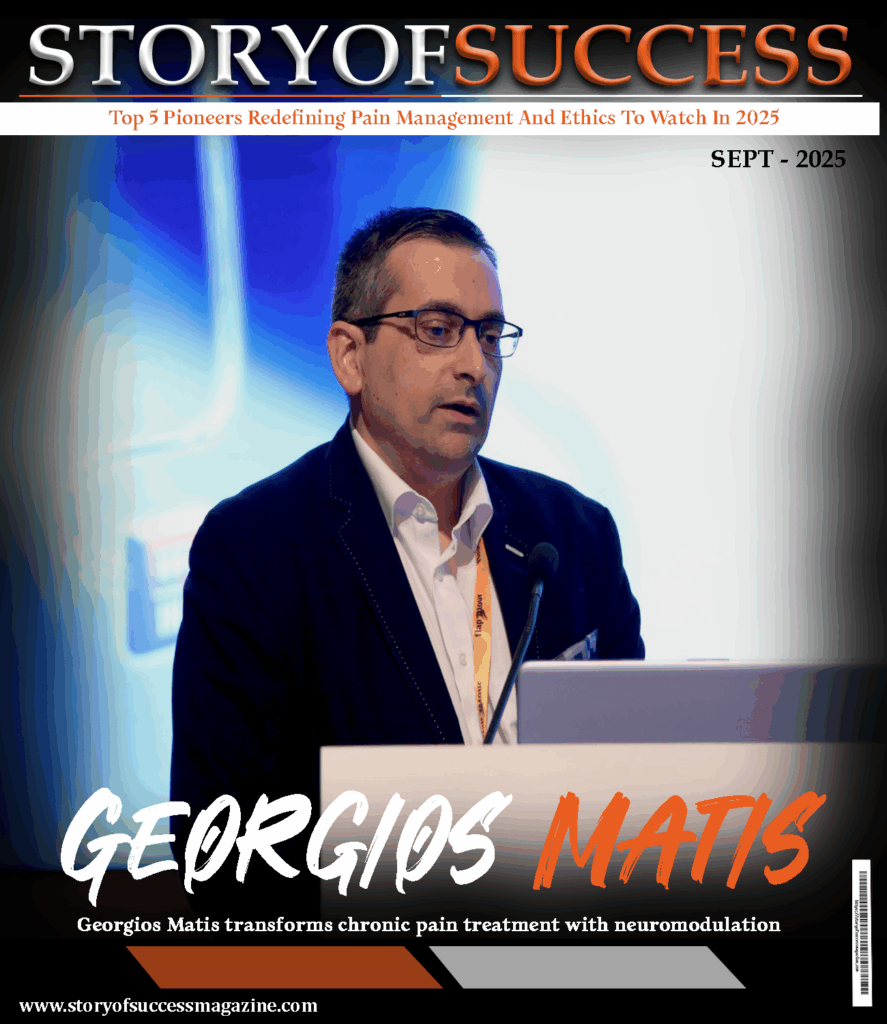
Top 5 Pioneers Redefining Pain Management And Ethics To Watch In 2025

Facebook
Twitter
LinkedIn
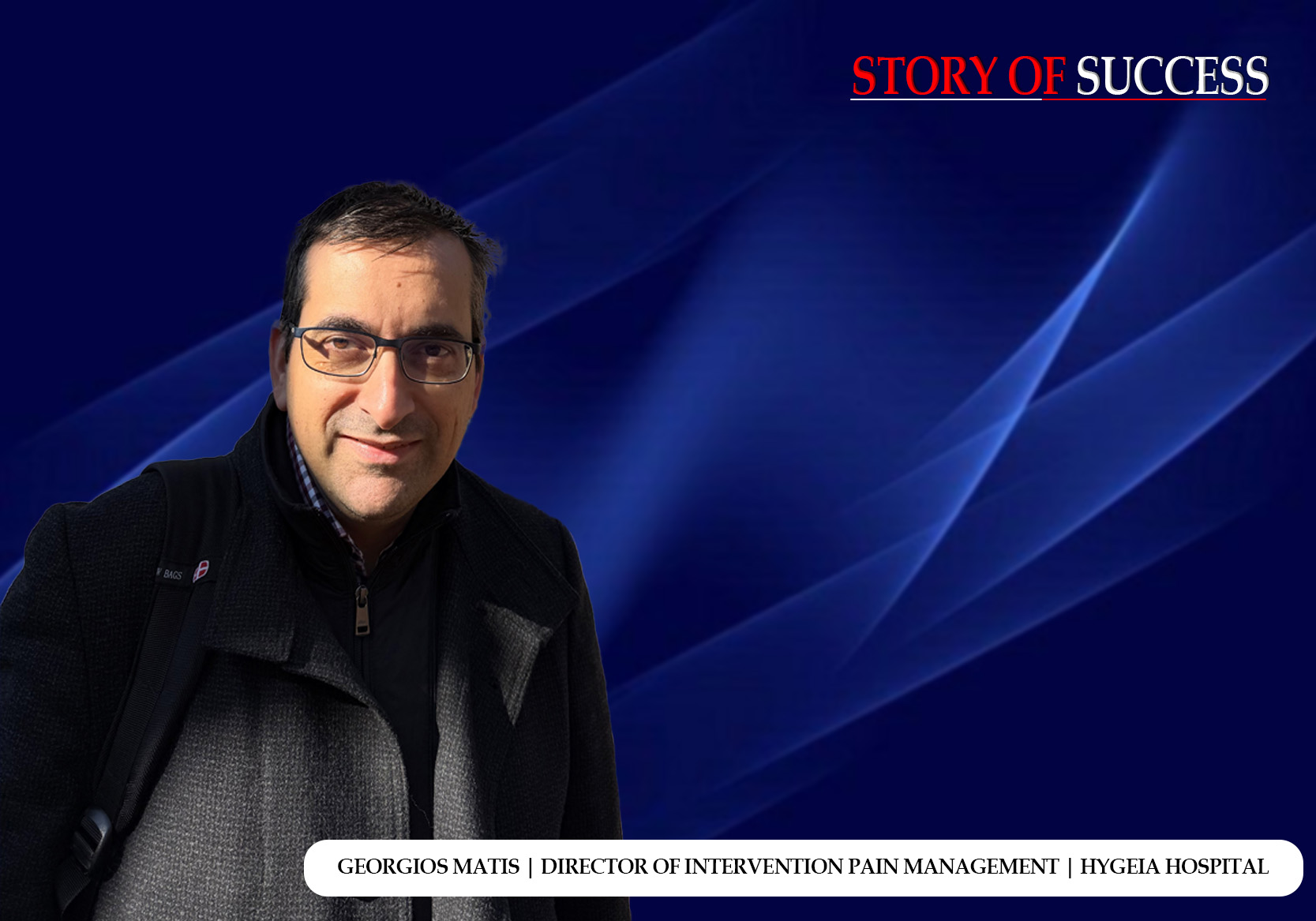
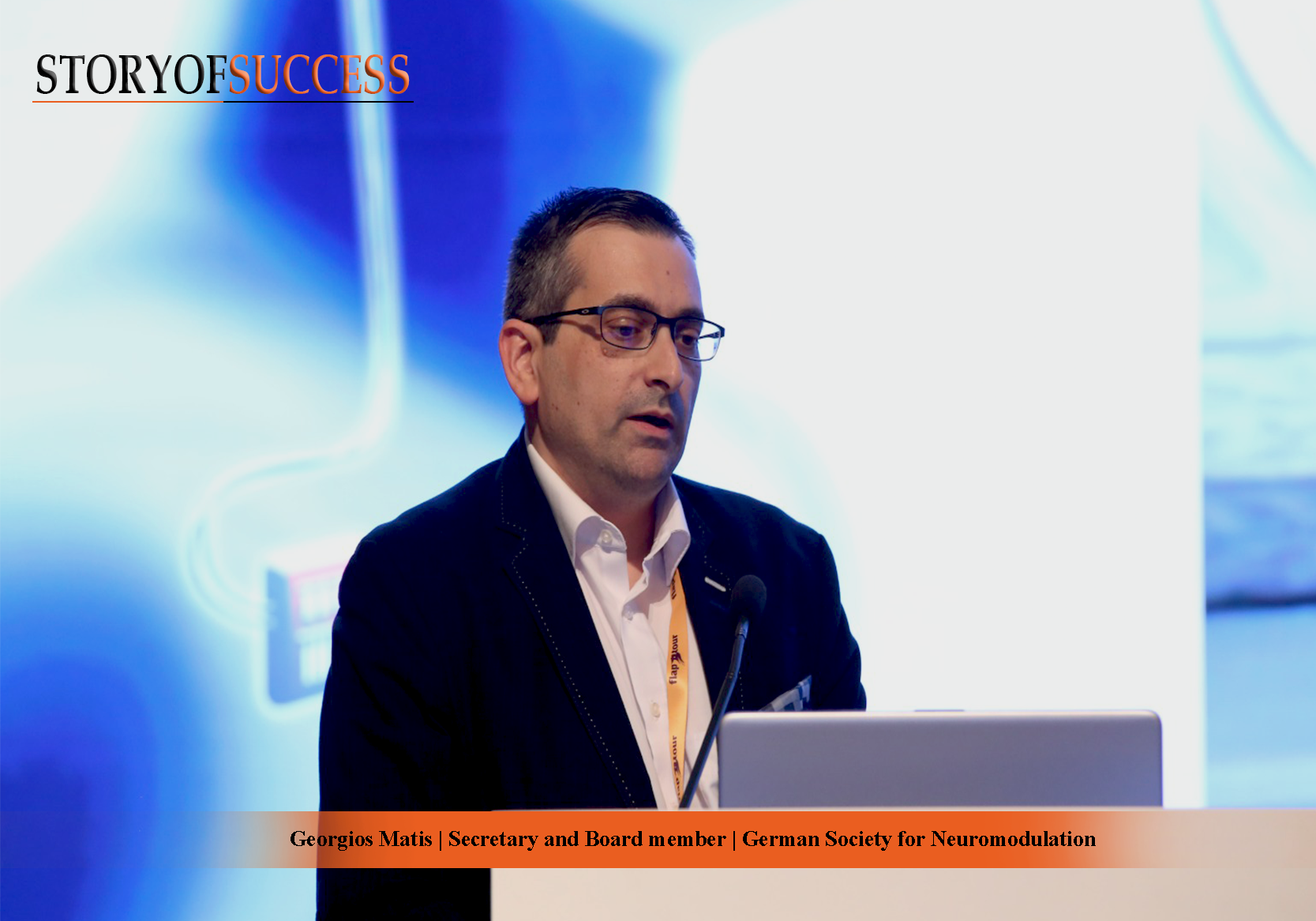
Georgios Matis: Where Science, Philosophy, and Humanity Meet in Neuromodulation
For Dr. Georgios Matis, neuromodulation is more than a medical specialty — it is a calling shaped by science, philosophy, and humanism. Trained as a functional neurosurgeon, he was first drawn to the precision of stereotactic surgery. Yet, it was the profound suffering of patients with chronic pain and spasticity that gave his career its true purpose.
From leading the Chronic Pain and Spasticity Section in Cologne to heading the Chronic Pain/Spasticity – Neuromodulation Unit at Hygeia Hospital in Athens, Dr. Matis has remained guided by one compass: the patient. “Like Odysseus navigating between Scylla and Charybdis, one must balance innovation with compassion,” he reflects.
Beyond the operating room, Dr. Matis has played a key role in shaping the global neuromodulation community. He serves as Editorial Board Member of Neuromodulation: Technology at the Neural Interface, Co-Chair of the International Neuromodulation Society’s Medical and Public Education Committee, and Secretary of the German Society for Neuromodulation. Through these roles, he has helped raise awareness about therapies that remain underutilized despite their transformative potential.
His guiding belief is rooted in the words of Heraclitus: “Character is destiny.” For Dr. Matis, character means recognizing that pain robs patients of dignity — and neuromodulation can restore it. This conviction runs through his books, including Intrathecal Therapy and Ziconotide: A Comprehensive Guide for Pain Management, From Surgeons to Storytellers, and Pain and Pulses: A Philosophical Dive into Spinal Cord Stimulation. Each blends rigorous science with narrative, reframing neuromodulation as not just a technology, but an art — a way to restore life’s rhythm, much like Kandinsky sought to restore order to chaos with color.
Answering the Silent Cry of Chronic Pain
Chronic pain is an invisible burden, eroding dignity and joy. For Dr. Georgios Matis, a functional neurosurgeon and leader in neuromodulation, the inspiration to dedicate his life to this field came from witnessing the despair of patients who felt unheard. “Chronic pain robs people even of life’s modest wealth,” he reflects, echoing Plato.
His career across Germany, Switzerland, Greece, and Cyprus has revealed the transformative power of neuromodulation. From a patient regaining the ability to walk and garden through spinal cord stimulation, to another finding relief with intrathecal ziconotide, these experiences showed him that technology can be an instrument of humanity.
Art, too, informs his mission. Edvard Munch’s The Scream embodies the anguish of those suffering in silence. For Dr. Matis, neuromodulation is the answer to that cry — offering not resignation, but innovation. With multifidus stimulation, closed-loop spinal cord systems, and evolving waveforms, he sees each therapy as “surgical poetry,” restoring not just movement, but life itself.
Bridging Science, Philosophy, and Humanism in Medicine
Dr. Georgios Matis’ career reflects a rare blend of international practice, scientific rigor, and philosophical depth. Licensed to practice in Greece, Cyprus, Germany, and Switzerland, he has learned to adapt therapies not only to physiology but also to cultural and systemic contexts.
As a neurosurgeon and academic, he stands at the crossroads of innovation and tradition. “Excellence is not an act, but a habit,” he recalls Aristotle, noting that true excellence in neuromodulation means blending advanced tools — from remote programming and AI-driven decision support to closed-loop spinal cord stimulation — with safety, empathy, and rigorous follow-up. His editorial and research background allows him to distinguish genuine progress from fleeting novelty.
Matis also seeks to unite medicine and the humanities. In From Surgeons to Storytellers, he highlights the narratives of suffering and hope behind every therapy. Like Rodin unveiling the soul within stone, he sees physicians as revealing possibility within limitation. For him, the true foundation of patient care lies in the marriage of science and humanism.
Neuromodulation as the Art of Restoring Harmony
For Dr. Georgios Matis, neuromodulation is both art and science — a way of altering the nervous system to restore balance where pain has created chaos. It is not a single therapy but a spectrum: spinal cord, dorsal root ganglion, and peripheral nerve stimulation; intrathecal therapies such as ziconotide; and new frontiers like multifidus stimulation for back pain.
He often likens it to tuning a musical instrument: just as a violin must resonate in harmony, so too can the nervous system be modulated to ease suffering. Advances such as remote programming, artificial intelligence, and closed-loop stimulation now allow therapies to adapt dynamically, bringing unprecedented precision and accessibility.
Drawing inspiration from Piet Mondrian’s pursuit of hidden order, Dr. Matis sees neuromodulation as transforming simple electrical pulses into profound clinical outcomes. For patients, it means freedom from torment and the chance to reclaim life; for society, it affirms that technology and compassion, together, can heal the human condition.
The Future of Chronic Pain Treatment Through Neuromodulation
For Dr. Georgios Matis, the future of chronic pain treatment lies at the intersection of medicine, technology, and philosophy. While drugs often lose effectiveness over time or cause side effects, neuromodulation offers personalized, reversible therapies tailored to each patient’s unique neurophysiology. Closed-loop systems, AI-guided programming, and diverse waveforms are transforming spinal cord stimulation into what he calls a “living medicine,” evolving dynamically with the patient.
He envisions a world where remote programming and cloud-based platforms make neuromodulation accessible everywhere — from urban centers to remote villages. Multifidus stimulation could prevent chronic back pain from advancing, while intrathecal therapies like ziconotide will continue to bring relief where other treatments fail. Crucially, neuromodulation will not replace other approaches but integrate with rehabilitation, psychology, and pharmacology in a true biopsychosocial model.
Quoting Leonardo da Vinci, Dr. Matis notes, “Simplicity is the ultimate sophistication.” For him, the elegance of neuromodulation lies in its ability to give life back — a paradigm shift where technology serves, rather than overshadows, human dignity.
A Decade of Transformation in Neuromodulation
The past decade has brought a revolution in neuromodulation, says Dr. Georgios Matis. Closed-loop spinal cord stimulation, which creates an active dialogue with the nervous system, has redefined therapy. Waveform innovations — from FAST and DTM, which targets glial modulation, to BurstDR addressing both pain and emotional suffering — have expanded the possibilities of spinal cord stimulation.
Equally groundbreaking is remote programming, which ensures access to care regardless of geography or crisis, while multifidus stimulation offers a restorative approach to mechanical back pain. Intrathecal therapies, particularly ziconotide, demonstrate how precise, non-opioid pharmacology can transform lives.
For Dr. Matis, these advances echo Picasso’s Cubism: fragmented perspectives creating a new reality. Each innovation is part of a larger narrative — one of persistence, creativity, and the refusal to accept chronic pain as inevitable. Medicine, like art, must constantly reinvent itself to fulfill its mission of alleviating suffering.
The Challenges and Ethics of Neuromodulation
Every medical revolution carries both promise and limitation, and neuromodulation is no exception, notes Dr. Georgios Matis. Despite its transformative potential, barriers of access, cost, and awareness mean too many patients spend years in needless suffering before reaching effective therapy. “For chronic pain patients, time lost is time irretrievably wasted,” he reflects, echoing Seneca.
Technical hurdles remain: closed-loop systems and AI-driven programming are not yet universally available, remote programming faces regulatory and cybersecurity concerns, and intrathecal therapies like ziconotide are underused due to limited physician familiarity. Emerging approaches such as multifidus stimulation still await broader validation.
Beyond technology lie ethical questions. Like Dalí’s surrealism challenging perceptions of reality, neuromodulation forces medicine to confront issues of identity, agency, and justice. For Dr. Matis, the challenge is not only to advance the science but to ensure its benefits are distributed fairly, with compassion and respect for human dignity.
Patient Selection as Science and Art
For Dr. Georgios Matis, choosing candidates for neuromodulation goes beyond clinical criteria like refractory pain or failed conservative treatments. “It is more important to know what sort of person has a disease than what sort of disease a person has,” he reminds, echoing Hippocrates. Listening to the patient’s story, understanding expectations, and weighing psychosocial factors are essential.
Advances in technology now allow more personalized approaches: multifidus stimulation for axial back pain, advanced spinal cord stimulation waveforms (FAST, DTM, BurstDR) for neuropathic pain, closed-loop systems for those seeking adaptive therapies, and intrathecal ziconotide for highly targeted, opioid-free solutions.
Matis likens the process to Michelangelo revealing a statue hidden within marble. “Within every patient lies the potential for restored function and dignity,” he says. The physician’s role is to uncover that potential, aligning technology with humanity to bring healing to life.
Innovation Must Walk Hand in Hand with Safety
As neuromodulation races forward — from closed-loop systems to AI-assisted programming — Dr. Georgios Matis emphasizes that progress must never outpace prudence. “Patient safety is the bedrock upon which true innovation must be built,” he says, underscoring the importance of clinical trials, registries, and international guidelines to ensure therapies remain both effective and sustainable.
In his role on the Editorial Board of Neuromodulation: Technology at the Neural Interface, Matis sees how evidence and peer review safeguard responsible adoption. Quoting Kant, he notes, “Science is organized knowledge. Wisdom is organized life.” For him, wisdom in medicine means integrating innovation within a framework of foresight and responsibility.
He likens long-term outcomes to Georges Seurat’s pointillism: a canvas built point by point. Each follow-up, adjustment, and ethical decision adds to the patient’s greater picture. True success, Matis reminds, is not the moment of implantation but the years of restored living that follow.
Treating Both Body and Mind in Chronic Pain
For Dr. Georgios Matis, chronic pain is more than a physical condition — it reshapes mood, cognition, and identity. Echoing Epictetus, he stresses that suffering is shaped not only by what happens to us, but by how we experience it. Effective treatment must therefore honor the unity of body and mind.
Neuromodulation therapies already reflect this holistic approach. BurstDR stimulation eases both pain and its emotional burden, while intrathecal ziconotide offers clarity without the cognitive fog of opioids. When combined with psychological support and rehabilitation, these therapies create a model of care that transcends reductionism.
Matis finds inspiration in Frida Kahlo, whose art expressed the deep entanglement of body and psyche. Similarly, he views neuromodulation not only as a technical intervention but as a way of reshaping the patient’s narrative of self — restoring dignity, identity, and the possibility of joy.
Equity as the Ethical Imperative in Neuromodulation
For Dr. Georgios Matis, neuromodulation must not be the privilege of a few. While cost-intensive at first, it proves cost-effective over time by reducing hospitalizations, opioid dependence, and disability. The real challenge, he argues, is ensuring that the hidden suffering of chronic pain becomes visible enough to drive systemic investment.
As Co-Chair of the International Neuromodulation Society’s Medical and Public Education Committee, Matis sees advocacy and policymaker engagement as essential. Quoting John Stuart Mill, he reminds us that the worth of medicine lies in its pursuit of dignity and relief for all, not just some.
He likens the task to Antoni Gaudí’s architecture — intricate and beautiful, yet designed for people. In the same way, neuromodulation must evolve into a living structure of care, intentionally built on equity as much as on innovation.
Informed Consent as Dialogue
Informed consent is not paperwork, but partnership. As Georgios Matis reminds us, patients need more than a list of risks and benefits — they need an honest conversation that includes uncertainty. True wisdom, as Socrates taught, begins with recognizing the limits of what we know.
This is the spirit behind From Surgeons to Storytellers. Physicians must become narrators, guiding patients through the complexity of innovation. Transparency is not a weakness; it is the foundation of trust. When doctors share openly, patients feel empowered to decide based on their own values.
The painter Caravaggio captured truth through light and shadow. In the same way, informed consent must illuminate both the promise and the risks of neuromodulation. Only then can patients step forward as partners — not passive recipients, but co-authors of their journey.
Neuromodulation and the Question of Self
Neuromodulation forces us to reflect on a fundamental question: when we alter perception or emotion through electrical or chemical modulation, are we repairing dysfunction — or reshaping identity itself? Descartes’ “I think, therefore I am” reminds us that thought and feeling define the self. Neuromodulation touches those very pathways.
Yet Georgios Matis sees it not as an intrusion, but as liberation. Chronic pain constrains freedom, narrowing choices and suppressing possibility. By relieving suffering, neuromodulation restores autonomy, enabling patients to act and live more fully. In this way, it aligns with philosophy’s deepest mission: to expand human freedom.
Like René Magritte’s surrealist art, which blurred boundaries between perception and reality, neuromodulation challenges what is “authentic.” But rather than creating artificiality, it restores authenticity, allowing patients to reconnect with their true selves, no longer defined by constant pain.
Guardians of Ethical Hope in Neuromodulation
Hope is the strongest medicine for patients with chronic pain — but also the most fragile. Desperation can make patients vulnerable to exaggerated promises. As Georgios Matis stresses, clinicians must ensure hope is anchored in evidence, ethics, and dignity. Sophocles cautioned, “What you cannot enforce, do not command.” We must not command hope where medicine cannot deliver.
This requires transparency, rigorous trials, and education that reaches both physicians and patients. In his role with the INS Medical and Public Education Committee, Matis works to make knowledge accessible, ensuring hope is nurtured through truth, not manipulation.
Vincent van Gogh’s luminous yet tragic art reminds us of hope’s dual nature — radiant but fragile. Neuromodulation must provide light without illusion, offering not miracles, but real, sustainable transformation. Ethical hope means walking alongside patients with honesty and compassion.
Empathy and Technology in Neuromodulation
Neuromodulation offers cutting-edge tools — AI, closed-loop systems, remote programming — but without empathy, such advances risk sterility. As Marcus Aurelius observed, “The soul becomes dyed with the color of its thoughts.” For patients scarred by years of pain, empathy is the brush that restores color.
In From Surgeons to Storytellers, Georgios Matis emphasizes that each consultation is a human narrative. Technology may relieve pain, but only compassion gives it meaning. Like a Chagall painting, empathy lifts patients beyond suffering, making neuromodulation not just a procedure, but a shared journey of healing.
The Next Ethical Frontier in Neuromodulation
As AI-driven neuromodulation collects vast neural data, questions of ownership, privacy, and consent grow urgent. Hannah Arendt warned that revolutions demand restraint; here, safeguards must protect autonomy as much as technology advances it.
Beyond pain, neuromodulation now touches psychiatry and cognition, raising dilemmas of therapy versus augmentation. This echoes humanity’s ancient struggle with hubris — knowing not only what we can do, but what we should.
Like Gustav Klimt’s art, rich yet bounded, neuromodulation’s future must balance brilliance with limits. Relief must never come at the expense of identity, justice, or dignity.
Building True Multidisciplinary Pain Centers
The Physician:
Chronic pain patients deserve more than fragmented care. True multidisciplinary centers — uniting neuromodulation, rehabilitation, psychology, and pharmacology — embody the Hippocratic ideal of treating the whole person, not just the symptom. The Hygeia Hospital Neuromodulation Unit in Athens is one such step forward.
The Philosopher:
Integration is equity. When care is scattered, dignity is lost; when it is unified, humanity is restored. Shared responsibility between clinicians, policymakers, and patients is not optional — it is an ethical imperative.
The Artist:
Like Diego Rivera’s murals, true healing is collective. Pain relief is not the triumph of one specialist, but the harmony of many hands. Medicine, at its best, becomes a communal masterpiece.
A Message to the Next Generation of Neuromodulation
The Physician:
Enter neuromodulation with courage to innovate, humility to let technology serve rather than rule, and imagination to see the patient beyond the device. Always picture their family, their hopes, their dignity.
The Philosopher:
Interdisciplinarity is wisdom. Read philosophy, study art, walk in nature. Medicine must converse with the humanities, or it risks losing its soul. True innovation is born when science meets meaning.
The Artist:
Henri Matisse taught us that “creativity takes courage.” Bold colors and simple truths remind us: in neuromodulation, creativity is not just new waveforms or AI, but keeping the human being at the very center of the canvas.
Recent Post
Top 5 Pioneers Redefining Pain Management And Ethics To Watch In 2025
September 17, 2025
Top 5 Women Leaders Driving Entrepreneurial Success In 2025
September 12, 2025
Top 5 Leaders Redefining Business Excellence In 2025
August 12, 2025