VISIONARY HEALTHCARE INNOVATORS SHAPING THE FUTURE OF SCS THERAPY TO WATCH IN 2026

Facebook
Twitter
LinkedIn
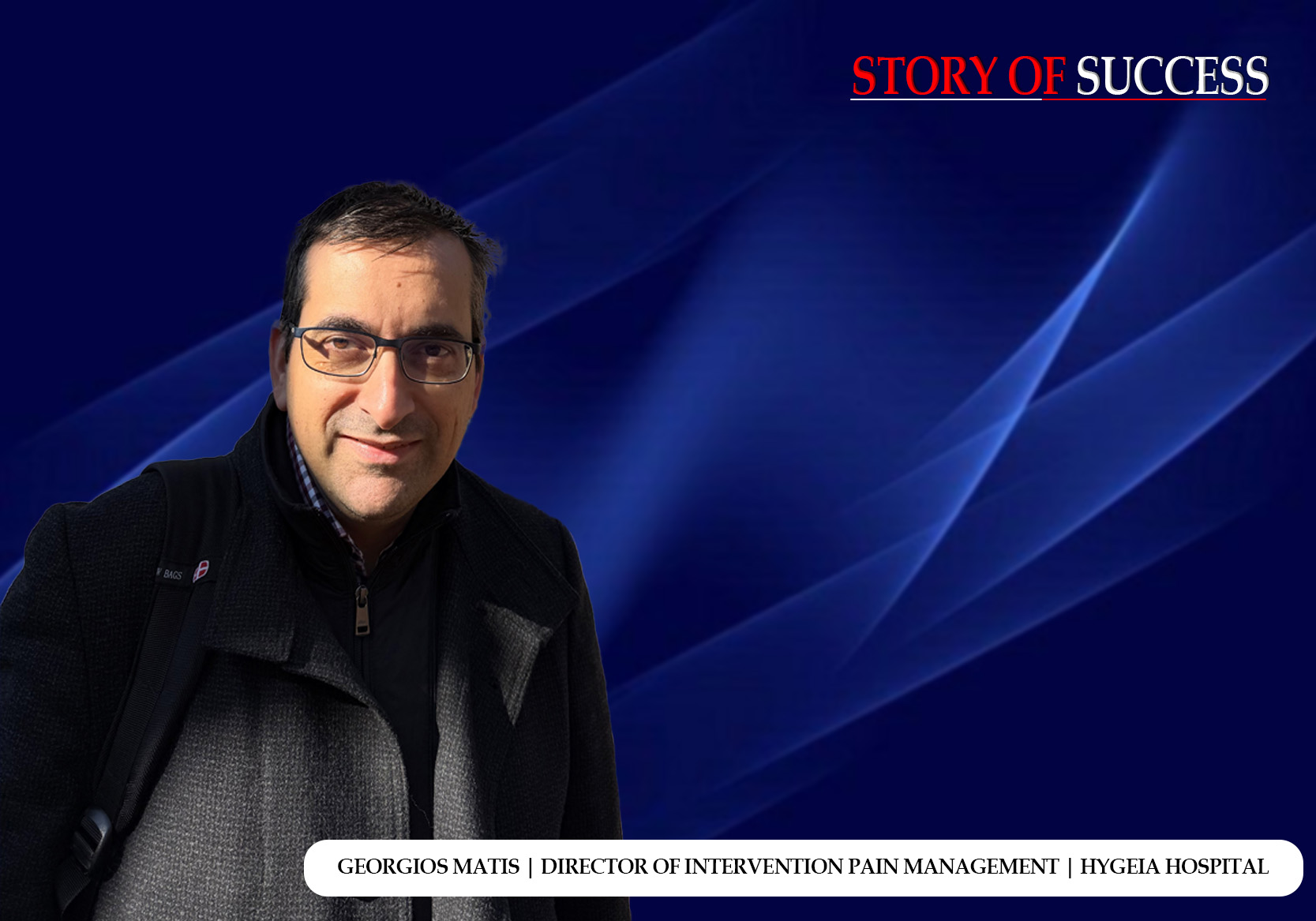
Between Pulses and Purpose: Georgios Matis and the Art of Neuromodulation
At the intersection of clinical precision and intellectual curiosity stands Dr. Georgios Matis, a physician who views spinal cord stimulation not merely as technology, but as dialogue. As Head of the Interventional Pain Management, Spasticity & Neuromodulation Unit at Hygeia Hospital in Athens, his work is driven by a single aim: transforming innovation into meaningful human relief.
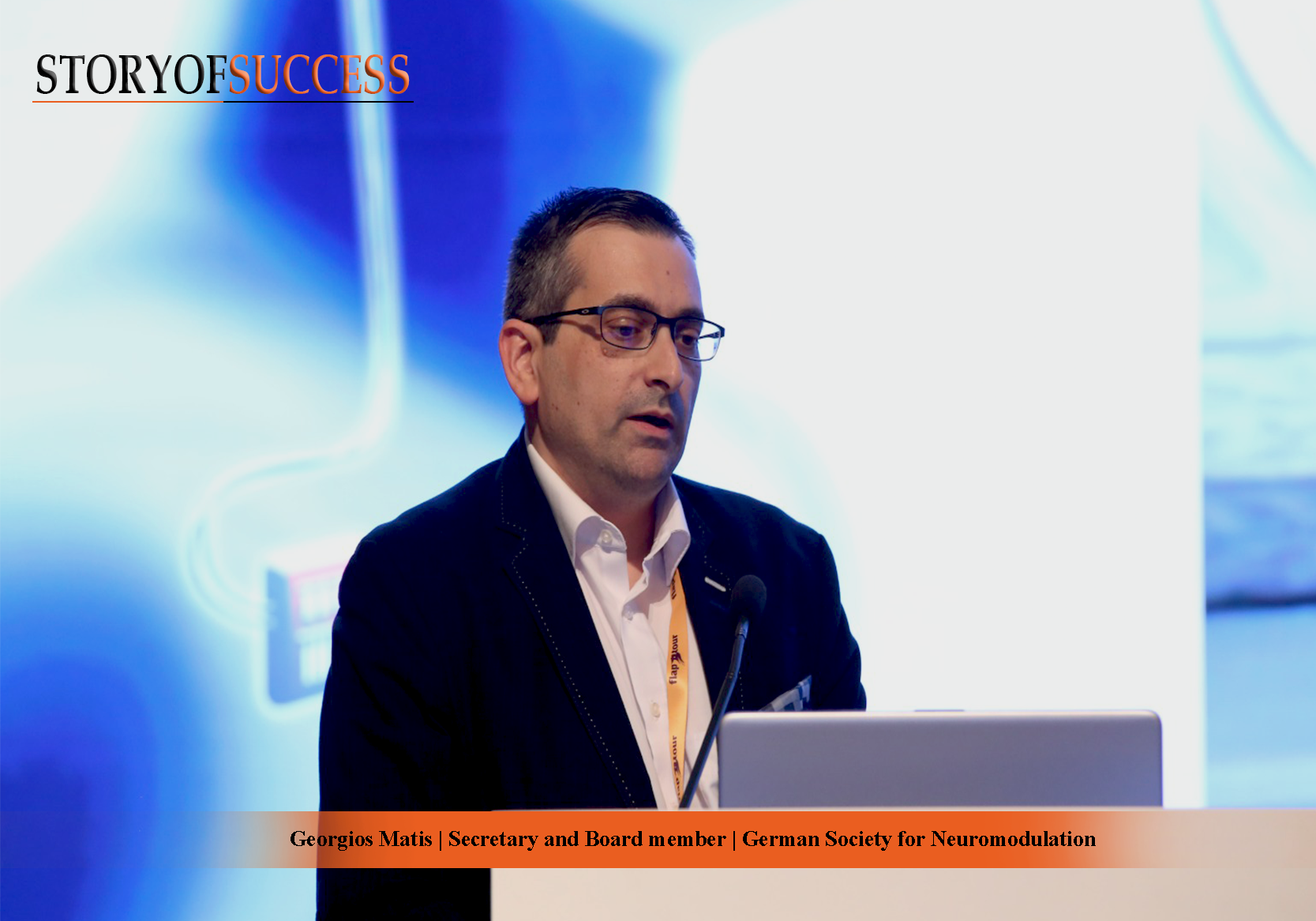
Dr. Matis’ influence extends far beyond the clinic. As an Editorial Board Member of Neuromodulation: Technology at the Neural Interface, the official journal of the International Neuromodulation Society, he remains deeply embedded in the scientific conversations shaping the future of the field. His global engagement continues through leadership roles including Co-Chair of the Society’s Medical and Public Education and Engagement Committee and Secretary of the German Society for Neuromodulation, alongside active membership in Greek and Canadian neuromodulation communities.
Licensed to practice medicine in Greece, Cyprus, Germany, and Switzerland, Dr. Matis has developed a rare, panoramic view of healthcare systems and patient needs across cultures. This global exposure has reinforced his belief that neuromodulation is as much about empathy as it is about engineering.
Inspired by philosopher Jürgen Habermas and the power of dialogue, Dr. Matis frames his career as a continuous conversation—between data and compassion, pulses and perception, science and humanity. This philosophy resonates through his writing, from Pain and Pulses: A Philosophical Dive into Spinal Cord Stimulation to his forthcoming book, Neuromodulation as Art, where medicine emerges as a creative, ethical, and deeply human endeavor.
For Dr. Georgios Matis, the future of neuromodulation is not just smarter technology—but wiser care.
When Pain Becomes a Language: Georgios Matis on the Deeper Purpose of Spinal Cord Stimulation
Spinal cord stimulation (SCS) reveals its true power not in transient pain, but in suffering that has settled in and reshaped a person’s life. Conditions such as persistent spinal pain syndrome, complex regional pain syndrome, painful peripheral neuropathies, and refractory ischemic pain often mark the point where conventional medicine has exhausted its options. In these moments, SCS offers more than analgesia—it invites a reconfiguration of the patient’s relationship with their own nervous system.
At Hygeia Hospital in Athens, within our specialized neuromodulation unit, I approach these indications through a multidisciplinary lens. Neurologists, psychologists, physiotherapists, and pain specialists work together to understand pain not merely as a diagnosis, but as a lived experience. This shared perspective ensures that technology serves the person, not the other way around.
This philosophy also shapes my academic work, including my contributions to The Handbook of Neuromodulation, where I argue that clinical indications cannot be separated from the psychosocial context in which pain exists. Chronic pain is never purely biological—it is emotional, social, and deeply existential.
Philosopher Byung-Chul Han describes modern life as burdened by invisible weights. Chronic pain may be the most intimate of these burdens. For me, selecting patients for SCS is an act of recognition—identifying where technology can meaningfully lift a weight that has become part of a person’s being, restoring not just function, but dignity and agency.
Listening Before Implanting: Georgios Matis on the Ethics of Patient Selection in SCS
The first criterion I consider in spinal cord stimulation is not technological, but narrative. Before algorithms, waveforms, or leads enter the conversation, I seek to understand how pain has rewritten a patient’s biography—what it has taken from their work, their relationships, and their sense of self. Only when this story is clearly articulated can SCS become a meaningful intervention rather than a procedural endpoint.
Clinical rigor, of course, remains essential. I carefully assess the nature of pain, distinguishing neuropathic from nociceptive components, reviewing prior treatment histories, anatomical considerations, and the patient’s ability to engage in long-term device management. My ongoing involvement in international neuromodulation societies and editorial work continually sharpens these criteria, especially as emerging evidence refines predictors of success in the era of closed-loop and adaptive stimulation.
Yet data alone is never enough. Drawing on the philosophy of Paul Ricoeur, I view patient selection as a hermeneutic act—an interpretation. The clinical evidence tells one story, the patient tells another, and the responsibility of the physician is to listen deeply to both. The art of medicine lies in bringing these narratives together until a coherent, ethical, and humane therapeutic path emerges.
In SCS, success begins not with implantation, but with understanding.
Beyond the Implant: Georgios Matis on Psychology as the Core of Neuromodulation
Psychological evaluation is not an accessory in spinal cord stimulation—it is its foundation. Chronic pain reshapes cognition, mood, and expectation, and these inner shifts profoundly influence how neuromodulation is perceived, trusted, and woven into daily life. A patient’s relationship with their device often mirrors their relationship with their own sense of agency.
In my leadership role at Hygeia Hospital and through my work with the International Neuromodulation Society, I consistently advocate for structured psychological assessment as a standard component of care. This approach ensures that we are not merely implanting technology, but fostering resilience, aligning expectations, and supporting long-term therapeutic engagement.
The philosophy of Martha Nussbaum, with its focus on human flourishing, offers a powerful lens here. Success in SCS cannot be reduced to pain scores alone. Its true measure lies in whether patients regain the capacity to act, to choose, and to participate fully in their lives.
Neuromodulation, at its best, is not just about easing pain—it is about restoring dignity and possibility.
A Rehearsal for Change: Georgios Matis on the Trial Phase of Spinal Cord Stimulation
For me, the trial phase of spinal cord stimulation is not a test—it is a rehearsal for a new way of living. It is a shared moment where patient and physician co-create a vision of improvement that goes beyond numbers, scales, and percentages. During this time, education, open dialogue, and the exploration of different waveforms—FAST, BurstDR, DTM, and Contour—become essential tools in personalizing the experience of stimulation.
Technological advances, particularly remote programming, have transformed this phase into a living dialogue rather than a static clinical exercise. Patients can offer real-time feedback from their everyday environments, allowing adjustments that respond to life as it is actually lived, not as it appears in the clinic.
Here, I am often reminded of Bruno Latour’s insight that technology is never neutral—it reshapes the networks we inhabit. The SCS trial phase is precisely where this reshaping begins. It is the space in which patient and device start to form a shared network of trust, adaptation, and possibility.
In neuromodulation, lasting success is rehearsed long before implantation.
Redefining Success: Georgios Matis on What Truly Matters After SCS
Pain reduction remains a central metric in spinal cord stimulation—but it is no longer sufficient on its own. In my practice, I place equal weight on functional recovery, sleep quality, return to meaningful activities, and changes in medication use, particularly opioid reduction. Together, these dimensions create a more honest and human portrait of therapeutic impact.
Through my work as an editor and contributor to academic literature, I consistently advocate for multidimensional outcome frameworks that reflect the lived complexity of chronic pain. Numbers and scales are necessary, but they are incomplete unless complemented by patient narratives—stories that reveal how individuals re-enter their lives, relationships, and ambitions.
The philosophy of Axel Honneth, centered on recognition, offers a powerful perspective here. True success in SCS is not limited to physiological change. It lies in restoring a patient’s sense of being seen, capable, and socially present once again.
In neuromodulation, the most meaningful outcomes are not just measured—they are lived.
The Ethics of Choice: Georgios Matis on Personalizing Neuromodulation Technology
My approach to spinal cord stimulation is shaped by evidence, experience, and above all, individualization. Closed-loop systems, adaptive algorithms, and an expanding spectrum of waveforms now allow therapy to be tailored to the unique neurophysiological and psychological profile of each patient. No single manufacturer, platform, or technology offers a universal solution.
Through my roles in international neuromodulation societies and academic publishing, I remain in constant dialogue with comparative data and emerging innovations from across the world. This global perspective ensures that clinical decisions are informed by best practices, not by habit or proximity.
In this process, I often return to Hannah Arendt’s reflections on responsibility in action. Selecting a device is never a purely technical choice—it is a moral commitment. It represents a promise to honor the patient’s trust, to steward science with integrity, and to choose not what is easiest or familiar, but what is most appropriate for the individual before me.
When Technology Listens: Georgios Matis on the Intelligence of Modern SCS
Closed-loop spinal cord stimulation has fundamentally reshaped the therapeutic landscape by introducing real-time physiological feedback into care. What was once a static intervention has become a responsive system—one that adapts to posture, movement, and the natural variability of daily life. In this shift, stimulation begins to listen as much as it delivers.
Artificial intelligence and remote programming have further extended the clinic into the patient’s home. These tools reduce geographical and logistical barriers, enabling continuity of care across borders—an evolution that holds particular significance in my work across multiple European healthcare systems.
Here, the philosophy of Bernard Stiegler feels strikingly relevant. He described technology as a form of memory, and modern SCS systems embody this idea. They “remember” the patient’s nervous system, learn from its responses, and evolve alongside it.
In neuromodulation, intelligence is no longer confined to the clinician alone—it is embedded within the therapy itself, reshaping how care is delivered, experienced, and sustained.
Beyond Complications: Georgios Matis on Responsibility After Implantation
Technical challenges such as lead migration, infection, or hardware malfunction remain part of the procedural reality of spinal cord stimulation. Yet, in my experience, the more subtle—and often more consequential—challenges arise from expectation management and sustaining long-term therapeutic engagement.
In my role as a mentor in neuromodulation education, I emphasize that complications are not confined to surgical events. They can be relational, emerging when communication weakens, expectations drift, or follow-up becomes fragmented. Addressing these challenges requires as much attentiveness as any technical intervention.
The philosophy of Emmanuel Levinas, with its notion of infinite responsibility to the Other, offers a guiding principle here. In SCS, this responsibility does not end in the operating room. It extends into years of careful listening, continuity of care, and ethical stewardship of the patient’s trust.
True success in neuromodulation is sustained not by the implant alone, but by the enduring commitment that follows it.
Co-Authoring Recovery: Georgios Matis on Partnership in Spinal Cord Stimulation
I frame spinal cord stimulation not as a cure, but as a partnership. It is a therapeutic tool that asks for participation, curiosity, and patience from both patient and physician. Through structured education and open dialogue, I invite patients to define what improvement truly means for them—on their own terms.
This philosophy is reflected in my writing, particularly in From Surgeons to Storytellers, where I explore the idea that medicine is, at its heart, a narrative practice. Rather than imposing a predetermined plot, we co-author the therapeutic story with our patients, allowing their values and aspirations to shape the outcome.
The work of Charles Taylor on identity offers a powerful guide here. Expectations are not merely hopes about reduced pain; they are expressions of who patients believe they can become again. Recognizing this transforms expectation-setting into an act of respect and restoration.
In neuromodulation, healing begins when patients are no longer passive recipients, but active partners in their own recovery.
Restoring Tomorrow: Georgios Matis on SCS as a Technology of Hope
Spinal cord stimulation often restores the rhythms that chronic pain quietly dismantles—sleep, movement, social connection, and even the simple ability to plan for tomorrow. These changes may resist easy quantification, yet they are frequently the most transformative aspects of therapy.
In both my clinical practice and academic work, I advocate for outcome measures that honor these dimensions, treating quality of life as a primary endpoint rather than a secondary observation. Pain scores matter, but they do not tell the full story of recovery.
The philosopher Richard Rorty wrote about the power of hope to reshape human lives. In this light, SCS becomes more than a medical intervention—it becomes a technology of hope, reopening futures that pain had slowly and silently closed.
When neuromodulation succeeds, it does not simply reduce suffering; it restores the possibility of living forward again.
Accompanying Change: Georgios Matis on the Living Practice of Long-Term SCS Care
Long-term care in spinal cord stimulation is not a fixed protocol—it is an evolving conversation. Regular clinical reviews, remote programming sessions, and periodic waveform optimization are essential to ensure that therapy remains aligned with the patient’s changing physiology, expectations, and life circumstances.
Through my international roles in neuromodulation, I have seen how crucial standardized yet adaptable follow-up frameworks are. Such structures allow continuity of care even when patients cross borders, transition between healthcare systems, or change providers, preserving therapeutic integrity over time.
Here, the thinking of Zygmunt Bauman feels particularly apt. His view of life as a constant state of becoming mirrors the reality of long-term SCS management. Neuromodulation is not the maintenance of a static solution, but an act of accompaniment—walking alongside patients as they continue to change.
In this shared journey, durability is achieved not through permanence, but through responsiveness and care.
The Art of Adjustment: Georgios Matis on Reprogramming as Creative Care
Reprogramming in spinal cord stimulation is not a fixed schedule, especially during the first year, when patients explore different waveforms and their nervous systems gradually adapt. With AI-assisted programming and remote access, this process has become more fluid, responsive, and centered on the patient’s lived experience.
In my practice, I encourage patients to see reprogramming not as a sign of failure, but as an opportunity for refinement. Each adjustment is part of an iterative journey toward personalization—listening, responding, and fine-tuning therapy as life unfolds.
The philosopher Gilles Deleuze described life as a process of continuous variation. This idea resonates deeply with SCS care. Every programming change is a small act of creative evolution within the therapeutic relationship, reflecting movement rather than stagnation.
In neuromodulation, progress is rarely linear. It emerges through attentive variation, where adaptation itself becomes a form of healing.
Innovation With Reach: Georgios Matis on Equity in Neuromodulation
Access to spinal cord stimulation remains uneven, shaped by national reimbursement policies, institutional resources, and levels of public awareness. Despite strong clinical evidence, neuromodulation is still viewed in some healthcare systems as a luxury rather than a necessity.
Through my roles in international neuromodulation societies and public engagement committees, I actively advocate for more equitable access. The argument is not only clinical, but economic and social: restoring function, reducing long-term medication dependence, and enabling participation ultimately benefit patients, healthcare systems, and societies alike.
The political philosophy of Nancy Fraser, centered on justice and participation, offers a vital lens. True innovation is not defined solely by technological sophistication, but by distribution—by ensuring that advances reach those who need them most.
In neuromodulation, progress must be measured not only by what is possible, but by who is included.
Reimagining the Possible: Georgios Matis on the Future of Neuromodulation
I envision a future in which neuromodulation becomes profoundly adaptive, weaving closed-loop systems, artificial intelligence, and digital health platforms into a seamless therapeutic ecosystem. In this future, devices will not simply stimulate—they will interpret, anticipate, and collaborate with the patient’s nervous system.
This vision shapes my forthcoming book, Neuromodulation as Art, where I explore a field in which engineering, neuroscience, and human experience converge into a new form of clinical creativity. International collaboration, sustained through scientific societies and academic networks, will be essential in guiding this evolution with both rigor and responsibility.
The philosopher Slavoj Žižek speaks of reimagining what is possible beyond existing frameworks. Neuromodulation, I believe, stands precisely at this threshold—where the boundaries between therapy, technology, and human expression begin to dissolve into something profoundly new.
The future of neuromodulation will not only treat disease; it will redefine how medicine imagines the human experience itself.

Recent Post
Top 5 Pioneers Redefining Pain Management And Ethics To Watch In 2025
September 17, 2025
Top 5 Women Leaders Driving Entrepreneurial Success In 2025
September 12, 2025
Top 5 Leaders Redefining Business Excellence In 2025
August 12, 2025